Sun Embroidery Appliqué: A Designer's Review
As an experienced embroidery designer who has spent countless hours at craft fair tables and handmade market booths, I know that not every design translates into a bestseller. Some files look perfect on a computer screen but fall flat when stitched onto fabric. Today, I am reviewing the Sun Embroidery Appliqué, a cheerful machine embroidery design described as having a friendly, smiling face perfect for brightening projects. My goal is to evaluate whether this specific machine embroidery design holds up under the scrutiny of a weekend craft fair setup and if it can drive sales for your handmade business.
First Impressions: Bold, Friendly, and Seasonal
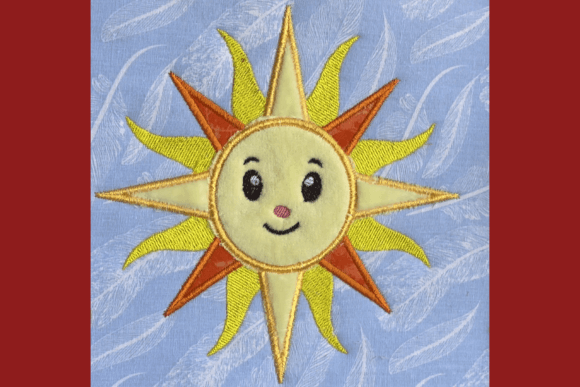
When I first load the Sun Embroidery Appliqué into my digitizing software, the immediate vibe is undeniably positive. This is not a subtle or minimal design; it is bold, festive, and radiates warmth. The description promises a "cheerful and smiling sun," which suggests a character-driven approach rather than just a geometric shape. For a craft fair product, this is a significant advantage. In a sea of neutral tones and rustic farmhouse decor, a bright, happy face stops the scroll and catches the eye from across the aisle.
The aesthetic leans heavily into the Summer category, making it a prime candidate for seasonal collections. It feels modern yet timeless, suitable for everything from nursery decor to trendy tote bags. The "friendly and happy look" mentioned in the product details indicates that this design will likely perform well as a focal point. It does not whisper; it shouts joy, which is exactly what you want when trying to engage customers quickly in a busy market environment.
Product Applications: Where Does It Shine?
To determine the commercial viability of the Sun Embroidery Appliqué, I visualize how it performs on various items I typically stock for my booth. Here is where this embroidery file truly excels:
- Tote Bags and Market Bags: This is arguably the strongest application. A large-scale version of the sun on a canvas tote bag creates an instant statement piece. The appliqué technique adds texture and depth, elevating a simple bag into a premium handmade product.
- Apron Embroidery: Kitchen aprons are a staple for craft fairs. Placing the smiling sun near the chest pocket or on the bib creates a whimsical, welcoming vibe. It pairs beautifully with solid-colored cottons or light stripes.
- Tea Towel Embroidery: While towels can be tricky due to their texture, the raised nature of an appliqué helps the design stand out against the woven loops. This works exceptionally well for summer kitchen collections.
- Embroidered Patches: Creating patches allows for versatility. Customers can buy them to iron onto jackets, backpacks, or hats. This lowers the barrier to entry for buyers who might hesitate to spend more on a full garment.
- Pillow Covers and Nursery Items: The description notes its suitability for nurseries. A soft yellow sun on a white or pastel pillow cover is a guaranteed seller for parents looking for gender-neutral, happy decor.
For the Etsy seller or boutique maker, this design also offers excellent potential for printable mockup creation. Because the sun is a recognizable shape, digital listings will pop, helping customers visualize the final result before purchasing.
Production Practicality and Batch Efficiency
From a production standpoint, time is money. When preparing for a craft fair, I need designs that are quick to hoop and stitch without constant intervention. The Sun Embroidery Appliqué appears to be a streamlined design. Since it is an appliqué, the process involves cutting the base fabric and stitching the outline. If the design assets are well-organized, this allows for rapid batch production.
I particularly appreciate designs that work well as both small accents and large focal points. The sun motif is scalable. You could create a tiny version for a hair bow or a massive version for a beach towel. However, scalability requires testing. Before committing to a full run of products, I always recommend creating at least one real mockup to ensure the proportions hold up. If the smile becomes distorted or the rays lose definition at smaller sizes, the finished product may look cheap rather than cute.
Another critical factor is stitch density. Appliqués generally have lower density than satin stitch designs, which means faster sewing times. This efficiency is crucial when you are aiming to produce dozens of items for a weekend event. The design should allow you to maximize your machine's output while maintaining high quality.
Technical Considerations for the Maker
While the Sun Embroidery Appliqué looks promising, there are technical nuances every professional must address to ensure a flawless result.
Fabric Texture and Stabilization
One challenge with appliqué is managing different fabric textures. If you are using thick terry cloth for tea towels or heavy denim for caps, the needle penetration and thread tension become critical. Always use the right stabilizer. For textured fabrics like towels, a cut-away stabilizer is often necessary to prevent puckering and ensure the appliqué lies flat. Without proper stabilization, the "friendly" sun might end up looking wrinkled and unprofessional.
Thread Contrast and Color Theory
The visual appeal of this design relies heavily on color contrast. A yellow sun on a dark navy background will scream for attention, whereas a pale yellow on cream might get lost. As a designer, I suggest experimenting with thread colors to find the most striking combinations. Metallic threads for the rays could add a touch of premium sparkle, while standard polyester threads offer durability and brightness.
Hoop Size and Placement
Before mass-producing, confirm the required hoop size. Some machines have limited throat space, and a large sun design might require re-hooping, which increases labor time. Ensure the design fits comfortably within your available hoops to maintain workflow efficiency. Additionally, check the spacing between the sun and the edges of your fabric. On curved surfaces like caps, the design may need to be adjusted to avoid distortion.
Dense Stitch Areas and Tiny Details
Although appliqué is generally forgiving, pay close attention to the facial features. If the eyes or mouth are created with very fine stitches, they might get lost on thick fabrics or at small scales. Test the design on scrap fabric first. Inspect the stitch density around the facial features to ensure they remain crisp and do not bleed together.
Maximizing Sales and Brand Consistency
Incorporating the Sun Embroidery Appliqué into your inventory can significantly boost your brand's visual identity. It signals positivity, warmth, and creativity—traits that resonate deeply with buyers at handmade markets. When displayed correctly, these products act as magnets. A table filled with sunny totes, bright pillows, and cheerful patches creates a cohesive and inviting atmosphere.
For the small shop product owner, consistency is key. Using this design across multiple product types (bags, towels, patches) creates a recognizable collection. Customers who love the design on a tote bag are more likely to purchase the matching patch or pillow cover, increasing your average order value. This cross-selling strategy is vital for maximizing profits during short craft fair windows.
Furthermore, the emotional connection plays a huge role. People buy handmade goods because they want to support creativity and bring joy into their lives. The Sun Embroidery Appliqué delivers on that promise literally. It is a design that makes people smile, and in the world of retail, a smile is often the precursor to a sale.
Final Verdict and Licensing Reminder
Overall, the Sun Embroidery Appliqué is a strong contender for any summer collection. Its friendly aesthetic, versatility across product types, and potential for high visual impact make it a valuable asset for craft fair sellers and digital entrepreneurs alike. It checks the boxes for being cute, functional, and commercially viable.
However, before you start hooping, remember to verify the licensing terms. If you plan to sell the commercial embroidery finished products, ensure your license covers the volume you intend to produce. Do not assume that purchasing the digital embroidery file grants unlimited rights. Check the specific terms regarding selling finished goods versus selling the file itself.
If you take the time to test the design, choose your fabrics wisely, and present it with confidence, this sunny design could very well be the star of your next booth. It is a reminder that sometimes, the simplest, happiest designs are the ones that connect most deeply with our customers.