Valentine Embroidery: A Designer's Practical Review
As a designer who spends countless hours evaluating machine embroidery design assets for both personal projects and client work, I approach every new file with a critical eye. The market is flooded with generic patterns, but finding a piece that balances charm with technical reliability is rare. When I first opened the Valentine Embroidery file, my immediate goal was to determine if this sweet ghost motif could transition from a cute digital preview to a high-quality finished product suitable for a small shop or Etsy listing.
First Impressions: Mood and Visual Personality
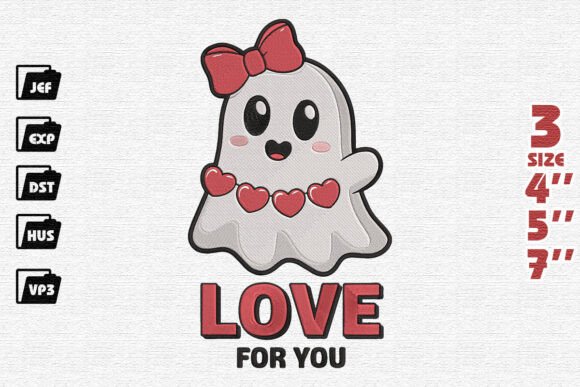
The concept behind this design is straightforward yet effective. It features a smiling ghost, capturing a playful vibe that perfectly bridges the gap between spooky fun and romantic affection. In the realm of Valentine S Day crafting, we often see hearts and cupids, so introducing a friendly ghost adds a unique twist. The layout feels balanced, avoiding the cluttered look that plagues many budget designs. The lines are clean, suggesting that the stitch density will be manageable on most home machines without excessive thread buildup.
Visually, the design exudes a sense of warmth. It doesn't feel cold or overly commercial; instead, it has the personality of a handmade item created with care. This visual appeal is crucial when you are trying to sell a handmade product in a crowded marketplace. Customers are drawn to items that tell a story, and this little ghost character definitely has one to tell. However, as a professional, I know that what looks good on a screen must translate well to fabric, which brings us to the practical application.
Real-World Application: From File to Fabric
To truly test the viability of Valentine Embroidery, I imagined using it for a custom embroidered tote bag project intended for a local craft fair. Tote bags are a staple for any craft business, offering a large canvas for designs. In this scenario, the simplicity of the ghost works in its favor. On a sturdy cotton canvas, the design would likely pop without needing excessive underlay, provided the correct stabilizer is used.
I also considered how this would perform on custom apparel, specifically a sweatshirt. Sweatshirts present challenges due to their texture and stretch, but the rounded shapes of the ghost suggest it would sit well on the chest area or sleeve. Unlike intricate floral patterns that can get lost in fleece loops, this design relies on bold outlines and solid fills. If executed with a mix of satin stitch for the eyes and mouth and fill stitch for the body, the result would be crisp and durable. For an Etsy seller looking to expand their holiday inventory, this design offers versatility. It could easily become an embroidered patch for denim jackets or a focal point on a baby onesie, fitting perfectly into the baby embroidery niche where soft, non-threatening characters are preferred.
The potential for personalized gift creation is also significant. Imagine adding a name below the ghost for a child’s Valentine’s Day exchange at school. The design leaves enough negative space around the character to accommodate text without crowding the image, a common issue with poorly planned digital embroidery file assets.
Where Caution Is Required
While Valentine Embroidery is robust, there are specific scenarios where a designer must exercise caution. First, consider the hoop size. While the design appears compact, always verify the actual dimensions against your machine’s capabilities. Attempting to force a design into a hoop that is too small can distort the proportions, making the ghost look stretched or squashed.
Fabric choice is another critical factor. On very thin fabrics like silk or lightweight rayon, the weight of the thread might cause puckering, especially if the stitch density is higher than anticipated. Similarly, on highly textured fabrics like heavy corduroy or thick knits, the fine details of the smile and eyes might not register clearly. In these cases, you might need to adjust the thread colors to ensure sufficient contrast against the background pattern.
Curved surfaces, such as caps, require special attention. The flat nature of the ghost design might not conform perfectly to the curve of a baseball cap panel without careful hooping and potentially a different backing material. Additionally, if you plan to use this for products that undergo frequent washing, such as kitchen towels or aprons, ensure the thread quality is high and the stitching is secure to prevent fraying over time.
Impact on Brand and Product Value
For a small shop owner or creative entrepreneur, the choice of design directly impacts brand perception. Using a high-quality asset like Valentine Embroidery signals professionalism. It shows that you care about the details of your finished product. Conversely, using a low-resolution or poorly stitched design can damage customer trust. When a buyer receives a personalized item, they expect it to look as good as the printable mockup they saw online.
This design enhances the perceived value of a basic item. A plain white pillow cover becomes a boutique decor piece once this charming ghost is added. It transforms a commodity into a collectible. For those selling design assets digitally, including this type of versatile character in a bundle can increase engagement and sales, as customers love designs that offer multiple use cases.
Practical Designer Notes for Success
Before committing to a full production run or a client order, follow these essential steps:
- Test on Scrap Fabric: Never skip the test stitch. Run the design on a scrap piece of the exact fabric you intend to use. Check for tension issues, thread breaks, and registration problems.
- Check Thread Contrast: Ensure the thread colors stand out against the fabric. A light gray ghost on a beige background might disappear, ruining the visual impact.
- Verify Hoop Size: Confirm that the design fits comfortably within your hoop with room for maneuvering. Do not push the limits of your machine’s workspace.
- Inspect Small Details: Zoom in on the eyes and mouth. These areas often use fine running stitch or narrow satin columns. If they look fuzzy in the preview, they will likely be problematic in reality.
- Review Licensing: As a responsible creator, confirm whether the license allows for commercial embroidery. Some files are for personal use only, while others permit selling the finished goods or even the embroidery file itself.
- Use Proper Stabilizer: The right stabilizer is the backbone of any successful project. For stretchy fabrics, use a tear-away or cut-away stabilizer that supports the fabric without distorting it.
In conclusion, Valentine Embroidery is a strong contender for anyone looking to add a touch of whimsy to their holiday embroidery collection. Its simple yet engaging character makes it suitable for a wide range of applications, from tote bag design to sweatshirt embroidery. By approaching it with the right technical preparation and a keen eye for detail, you can create beautiful, professional-grade items that delight customers and strengthen your brand identity. Whether you are a hobbyist making gifts or a business owner scaling up your small shop product line, this design offers the charm and reliability needed for success.